INSIDE THE PHARMACY SHOW 2026: OUR KEY TAKEAWAYS.

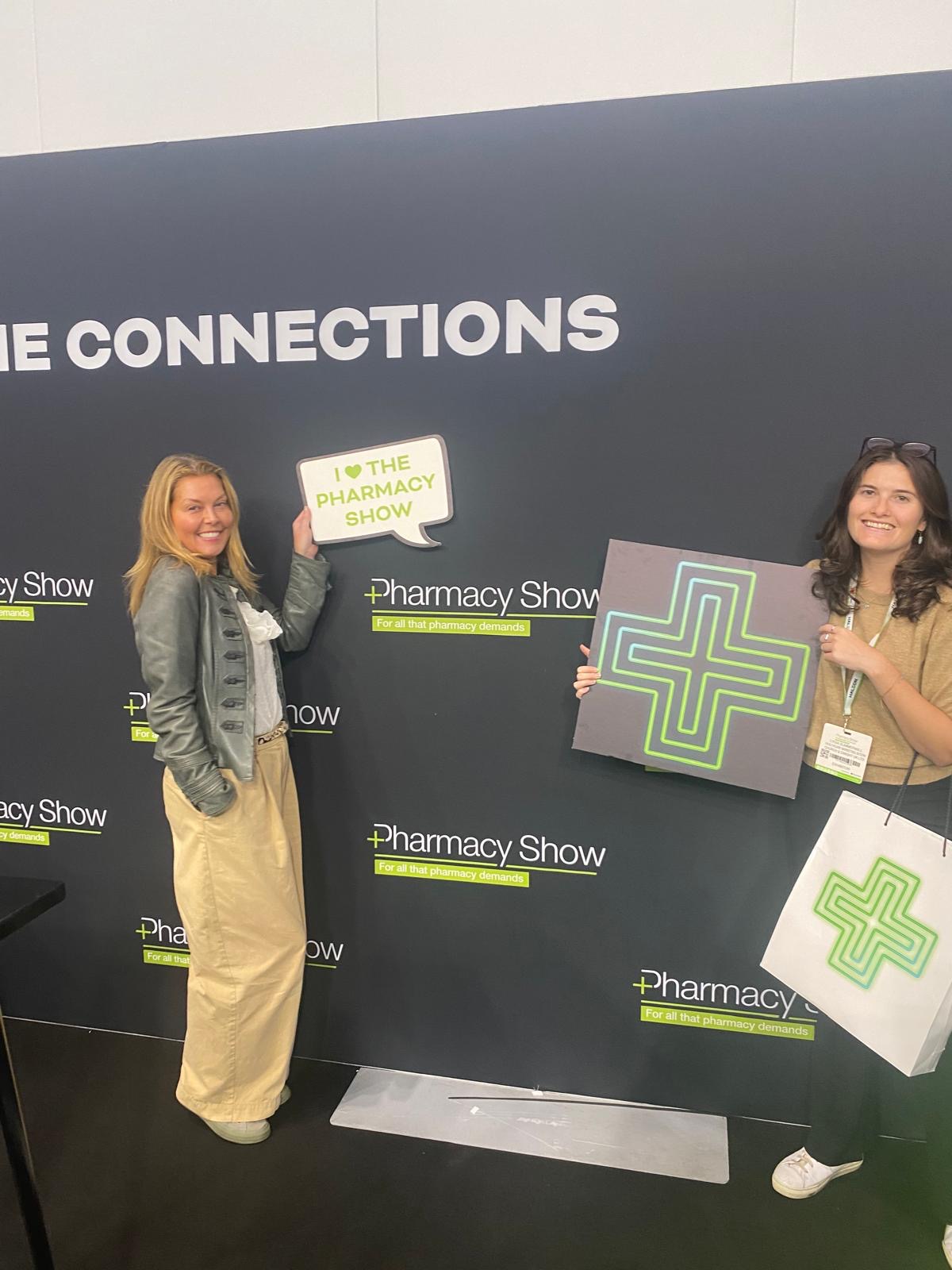
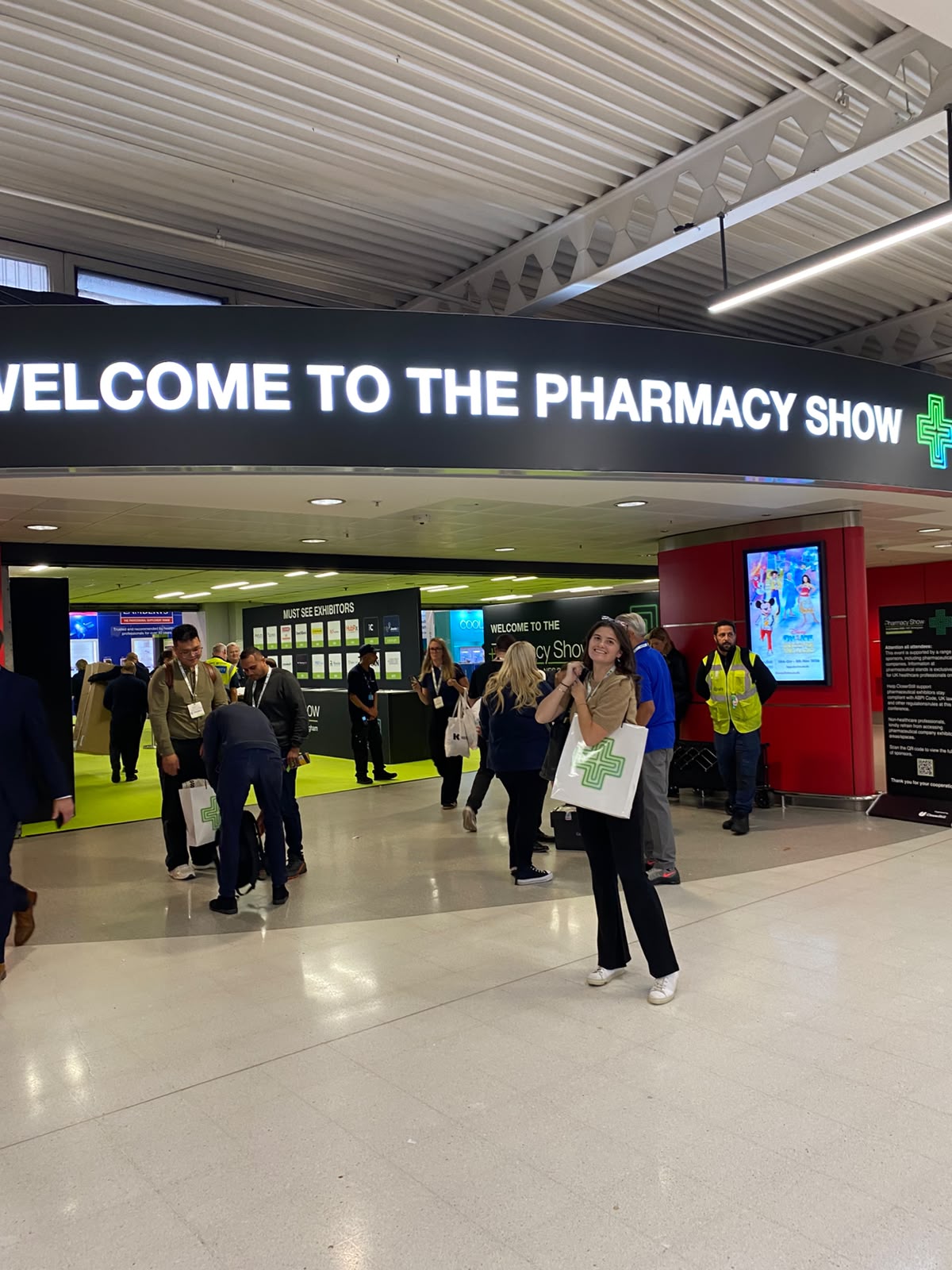
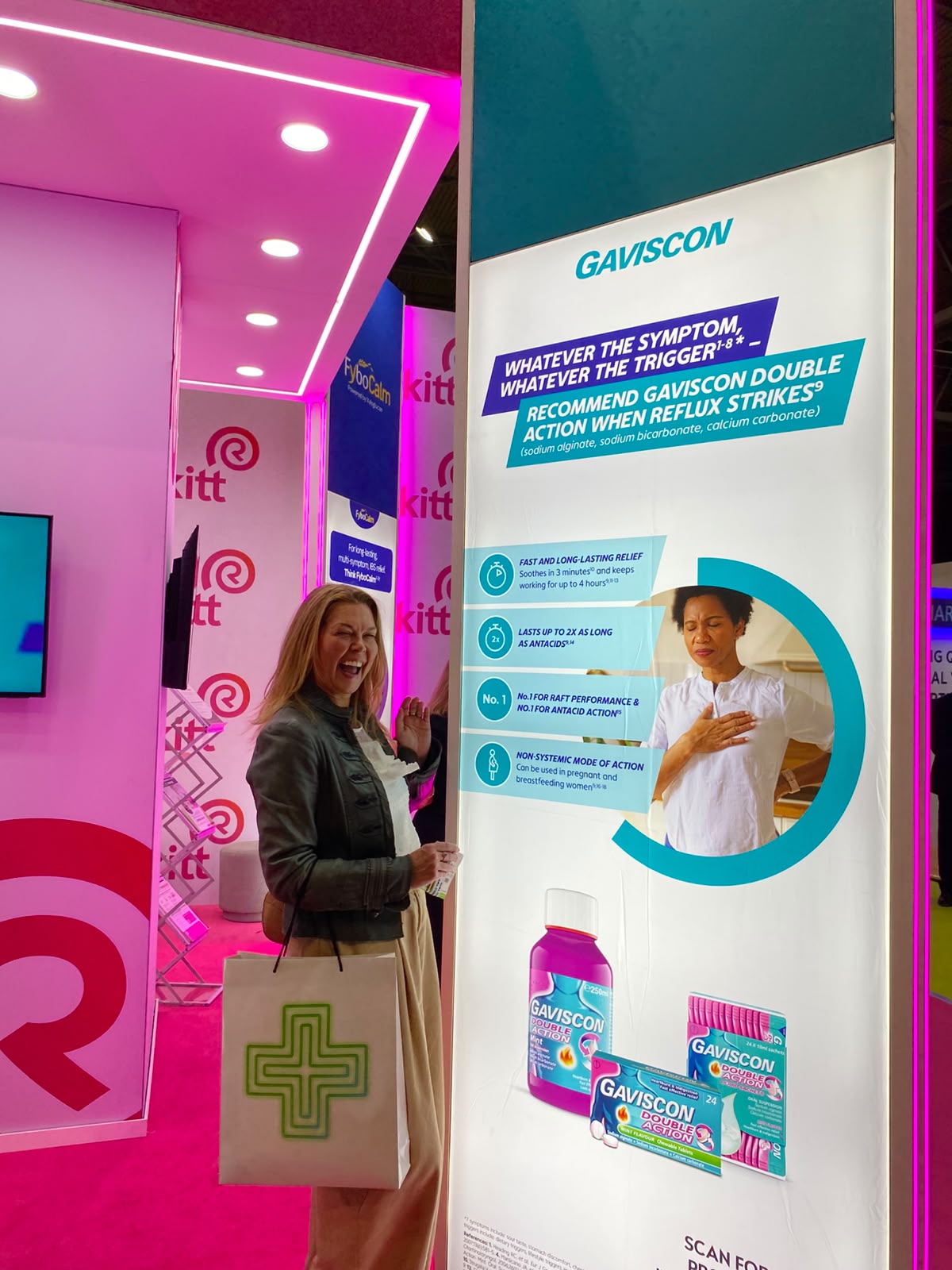
Last week, Account Director Lucy and Senior Account Executive Grace, visited the Pharmacy Show in Birmingham to see the latest innovations in UK pharmacy and how these could impact our pharmacy HCP communications. 

There was plenty to explore with over 300 exhibitors – technology innovators, clinical providers, manufacturers, media, training and policy organisations… to name just a few! We were blown away by the sheer variety of products and services that come together to power our high street pharmacies. 

Read on as Grace shares her key takeaways from a day exploring the future of community pharmacy. 

Community pharmacy’s expanding clinical role

One of our biggest takeaways was just how much the role of pharmacy is evolving towards community health management and personalised care. This is key in driving the NHS 10-Year Plan and it was inspiring to hear what’s coming next for improved patient care. It’s a shift that will heavily influence our work in both patient and pharmacy communications. 

Pharmacy First was unsurprisingly a hot topic, with plenty of discussion on how to help pharmacies effectively implement the service across England. Community Pharmacy England highlighted the importance of technology in facilitating better communication between pharmacies and GPs, helping patients get the right care, in the right place and reducing GP burden. There was also the question of GPs being ‘willing’ to give this prescribing work to pharmacies to support this change. This is closely linked to one of our upcoming projects in 2027, so it definitely caught our eye…   

With newly qualified pharmacists now able to independently prescribe, along with the expansion of Patient Group Directions (PGDs), there was a huge emphasis on the growing role of pharmacy in diagnosing and treating patients, rather than just delivering medicines. It was fascinating to explore the many exhibitors offering triaging support, red flag training and consultation tools to facilitate the expanding role of pharmacy in clinical care. This is a great indication of exciting potential opportunities on the horizon for pharmacy comms over the coming years.  

Supporting pharmacy teams through change 

Chemist and Druggist hosted a thought-provoking talk on pharmacy training and learning, emphasising the increased importance of CPD and maintaining training standards as pharmacy teams shift towards neighbourhood health management. As an agency with several pharmacy training programmes in our workflow at any one time, this was music to our ears, and we are excited to see how our clients can help improve patient care and make a real difference to patient consultations. 

These expanding responsibilities come at a time when pharmacies are under considerable financial pressure. We spoke to the National Pharmacy Association, who emphasised that pharmacies, more than ever, need backing from both the NHS and manufacturers to be able to deliver their part of the NHS 10-Year Plan ambitions. For our clients, this reinforces the value of providing top-tier support that helps pharmacy teams ultimately improve patient care. 

AI: opportunity and accountability 

Another buzzword was rife in talks and stands: AI! There are myriad ways in which AI is already helping pharmacy, for example, with robotics and automated dispensing, clinical decision and consultation support, medicines safety, automating admin and freeing up time for more personalised care. With these developments come important questions: who is responsible, and whose fault is it if anything goes wrong?

I’d love to hear your thoughts. With the rapidly growing world of AI, regulation is struggling to catch up, and pharmacies need a clear framework. It will be a fascinating landscape over the next few years that needs to be carefully managed but has the potential to significantly enhance patient care. 

GLP-1s and the need for GI support 

GLP-1 weight loss medication and gut health were, as expected, at the forefront of discussions. We work across several GI brands, and it was particularly relevant to hear about the need for more pharmacy support in managing the GI side effects of weight loss drugs. It’s an area where manufacturers have an increasing responsibility to support in the coming years, and an important opportunity for our clients to develop the tools and assistance needed. 

The changing role of pharmacy technicians 

The role of pharmacy technicians is also changing, giving them greater responsibility and freeing up pharmacists’ time. For example, they can now supply and administer medicines under PGDs. NHS England hosted an excellent panel that dove into the profession and how its growing role is key in supporting Pharmacy First and independent prescribing. This is a development we’ll be keeping a close eye on, as it will affect our pharmacy communication strategy in the upcoming years. 


A growing focus on prevention and mental health 

Linking into the NHS 10 Year Plan, prevention was another major theme, with a focus on point-of-care testing (and many testing freebies, to the team’s delight!), smoke-free ambitions, a changing vaccination landscape and early cancer detection.  

A topic we hadn’t expected to see so much of was the conversation around the role of pharmacy in mental health support. As awareness grows and the conversation around mental health becomes more normalised, it’s encouraging to see that pharmacies are moving with this. This has the potential to reduce health inequalities and make help more accessible. However, there is currently no commissioned pharmacy mental health service. Do you think pharmacies should be supporting patients’ mental health, or should GPs remain the first port of call? 

Some final words…

For us at Verve, the message was clear: as the role of community pharmacy continues to evolve, it means that the stronger our communications, the  greater the impact will be on patient outcomes.

We look forward to taking these learnings into our client work in the coming year.  

Thank you to Church & Dwight, our hosts: we had a brilliant day and are already excited for next year! 

Who we are

Verve is a health communications agency with the belief that great scientific communication doesn’t just inform – it connects, inspires, and drives action. Science is more than just clinical data and research papers; it’s also about the people it impacts and the ideas that shape the world around us. 

Our philosophy at Verve, Science, humanised, brings together the precision of science and the power of human connection. We blend data with empathy, translating complexity into communication that resonates. Whether we’re creating compelling healthcare narratives, simplifying scientific breakthroughs, or engaging audiences with thoughtful storytelling, our mission is the same: to bridge the gap between knowledge and understanding. 

Because when science is understood, it becomes more than knowledge, it becomes meaningful. We don’t just convey facts; we create experiences that make science accessible, relevant, and engaging. Our approach ensures that every story is rooted in accuracy but delivered with emotion, inspiring people to take action. 

In a world where science is more important than ever, clear and impactful communication is key. Let’s make science something individuals don’t just read about-but truly connect with. 

Thanks for reading! Stay curious, stay connected – We give you Verve. 

You might also enjoy • You might also enjoy • You might also enjoy • You might also enjoy • You might also enjoy • You might also enjoy • You might also enjoy • You might also enjoy You might also enjoy • You might also enjoy • You might also enjoy • You might also enjoy • You might also enjoy • You might also enjoy • You might also enjoy • You might also enjoy
INSIDE THE PHARMACY SHOW 2026: OUR KEY TAKEAWAYS
Last week, Account Director Lucy and Senior Account Executive Grace, visited the Pharmacy Show in Birmingham. Read on as Grace shares her key takeaways from a day exploring the future of community pharmacy. 
MAY JOURNAL CLUB
At our May Journal Club, the committee secretly challenged us to read a ‘scientific paper’ that was completely fake but generated by medical researchers to appear credible. We’re proud to say we spotted it, although it wasn’t quite as obvious as expected.

Cookies information
We use cookies to understand how visitors use our site. By clicking the “Accept” button, you agree to our use of cookies and similar technologies. You can manage your browser settings to disable cookies at any time. For more information, see our Cookie Policy.